Medicaid Changes Effective October 1, 2026: What Every Medical Practice Needs to Do Now!
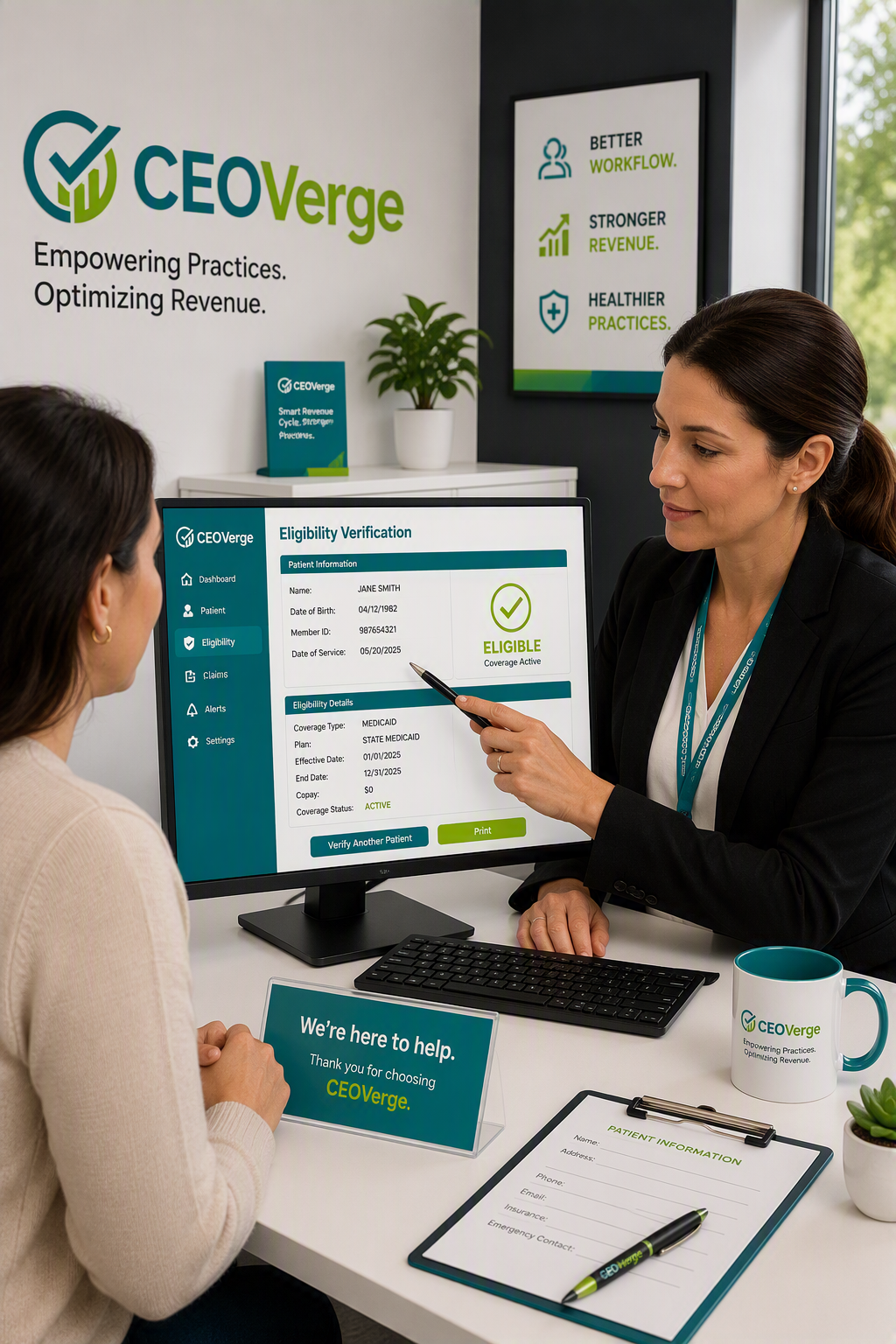
Healthcare providers across the country are preparing for Medicaid eligibility changes that begin on October 1, 2026. While many practices are focused on patient care, these changes could directly impact eligibility verification, claim denials, collections, and revenue cycle performance if operational teams are not prepared. [vamedicaid...rginia.gov]
For medical practices, this is not just a compliance issue. It is a revenue protection issue.
At CEOVerge, we believe the practices that proactively prepare their front desk, and billing teams today will be the ones that avoid unnecessary denials, aging receivables, and coverage-related write-offs tomorrow.
What Is Changing on October 1, 2026?
Under federal Medicaid reforms, states must begin implementing new eligibility requirements for certain Medicaid beneficiaries. One of the first major changes impacts Medicaid eligibility for some non-citizen adult populations, while additional eligibility verification and enrollment requirements continue rolling out into 2027. [vamedicaid...rginia.gov], [content.go...livery.com], [medicaid.gov].
Many Medicaid members who previously qualified may need to undergo additional reviews or may no longer qualify under the revised rules. Providers should anticipate increased eligibility fluctuations and a higher risk of patients presenting for services without active coverage. [vamedicaid...rginia.gov].
Why This Matters to Medical Practices
When patient eligibility changes, revenue cycle performance changes.
Practices that rely heavily on Medicaid populations may experience:
Increased eligibility-related claim denials
More patients arriving with inactive coverage
Higher self-pay balances
Delayed reimbursements
Additional staff workload for coverage verification
Increased accounts receivable tied to Medicaid claims [content.go...livery.com], [ama-assn.org]
The reality is simple:
A claim cannot be paid if the patient is no longer eligible.
That is why operational readiness is critical.
What Front Desk Teams Should Focus On
Healthcare providers across the country are preparing for significant Medicaid eligibility changes that begin on October 1, 2026. While many practices are focused on patient care, these changes could directly impact eligibility verification, claim denials, collections, and revenue cycle performance if operational teams are not prepared. [vamedicaid...rginia.gov].
For medical practices, this is not just a compliance issue. It is a revenue protection issue.
At CEOVerge, we believe the practices that proactively prepare their front desk and billing teams today will be the ones that avoid unnecessary denials, aging receivables, and coverage-related write-offs tomorrow.
What Is Changing on October 1, 2026?
Under federal Medicaid reforms, states must begin implementing new eligibility requirements for certain Medicaid beneficiaries. One of the first major changes impacts Medicaid eligibility for some non-citizen adult populations, while additional eligibility verification and enrollment requirements continue rolling out into 2027. [vamedicaid...rginia.gov], [content.go...livery.com], [medicaid.gov]
Many Medicaid members who previously qualified may need to undergo additional reviews or may no longer qualify under the revised rules. Providers should anticipate increased eligibility fluctuations and a higher risk of patients presenting for services without active coverage. [vamedicaid...rginia.gov]
Why This Matters to Medical Practices
When patient eligibility changes, revenue cycle performance changes.
Practices that rely heavily on Medicaid populations may experience:
Increased eligibility-related claim denials
More patients arriving with inactive coverage
Higher self-pay balances
Delayed reimbursements
Additional staff workload for coverage verification
Increased accounts receivable tied to Medicaid claims
The reality is simple:
A claim cannot be paid if the patient is no longer eligible.
That is why operational readiness is critical.
What Front Desk Teams Should Focus On
The front desk is now the first line of defense against future denials.
1. Verify Medicaid Eligibility Before Every Visit
Do not rely on previous visit history.
A patient who was eligible last month may not be eligible today.
Eligibility should be verified:
Prior to scheduled appointments
At check-in
Before procedures or surgeries
Before ordering high-cost services
2. Update Patient Demographics Every Visit
Many patients lose coverage because Medicaid cannot reach them during renewal periods.
Confirm:
Mailing address
Mobile phone number
Email address
Emergency contact information
3. Educate Patients Proactively
Front desk staff should encourage Medicaid patients to:
Review all Medicaid correspondence
Respond to renewal requests immediately
Keep contact information updated
Complete any requested eligibility documentation
State Medicaid agencies are already encouraging providers to help educate patients about responding to notices and keeping information current. [vamedicaid...rginia.gov].
4. Identify High-Risk Appointments Early
Flag patients with:
Recent eligibility interruptions
Medicaid pending status
Previous Medicaid denials
Inconsistent coverage history
Early intervention can prevent denied claims later.
What Billing Teams Should Focus On
The billing department will carry much of the financial impact from these changes.
1. Increase Eligibility Audits
Perform regular audits of:
Medicaid eligibility verification workflows
Registration accuracy
Claim filing trends
Eligibility denial patterns
Identifying trends early prevents revenue leakage.
2. Monitor Eligibility-Related Denials
Track denial codes related to:
Inactive coverage
Patient not eligible on date of service
Benefit termination
Member not found
These indicators will help management understand the true impact of Medicaid reforms on revenue.
3. Accelerate Claim Submission
The faster claims are filed, the faster eligibility issues can be identified and corrected.
Practices with delayed claim submission often discover coverage issues months after services were rendered.
4. Strengthen Patient Financial Workflows
Coverage interruptions may lead to more patient responsibility balances.
Billing teams should review:
Self-pay procedures
Payment plan options
Financial counseling workflows
Collection policies
5. Create Monthly Medicaid Revenue Reporting
Track:
Medicaid volume
Denial rate
Collection rate
Eligibility-related write-offs
Days in A/R
These metrics provide early warning signs before revenue problems become significant.
The Hidden Risk Most Practices Are Missing
Most practices think Medicaid changes only affect eligibility.
In reality, they affect the entire revenue cycle.
When eligibility disruptions increase:
✅ Denials increase
✅ Accounts receivable grow
✅ Staff workload increases
✅ Collection rates decline
✅ Cash flow slows
This is why successful practices are treating October 1st as both an operational and financial initiative.
How CEOVerge Helps Practices Stay Ahead
At CEOVerge, we work with healthcare providers to strengthen their revenue cycle before eligibility issues become revenue problems.
Our teams help practices:
Verify patient eligibility more effectively
Reduce eligibility-related denials
Improve front-desk workflows
Monitor payer trends
Accelerate claim resolution
Protect cash flow during regulatory changes
As Medicaid requirements continue evolving, practices need more than billing services. They need proactive revenue intelligence.
Final Thoughts
October 1, 2026 is more than a policy date. It is a revenue cycle readiness deadline.
Practices that train their front desk teams, strengthen eligibility processes, and proactively monitor denial trends will be better positioned to maintain financial stability.
Those that wait may find themselves fighting preventable denials, delayed payments, and declining collections.
The best time to prepare for Medicaid changes is before they impact your revenue.
About CEOVerge
CEOVerge helps medical practices improve financial performance through strategic revenue cycle management, insurance verification, denial prevention, payment posting, accounts receivable recovery, and business intelligence reporting.
Want to learn how prepared your practice is for the upcoming Medicaid changes? Contact CEOVerge for a revenue cycle assessment today.